

Our aspiration is to make Tripura as the NE’s leading tourism destination in the coming days
Tourism will generate self-employment and make our youth economically self-reliant, says Sushanta Chowdhury, Tripura’s tourism, transport and food minister
Sushanta Chowdhury, Tripura’s tourism, transport and food minister
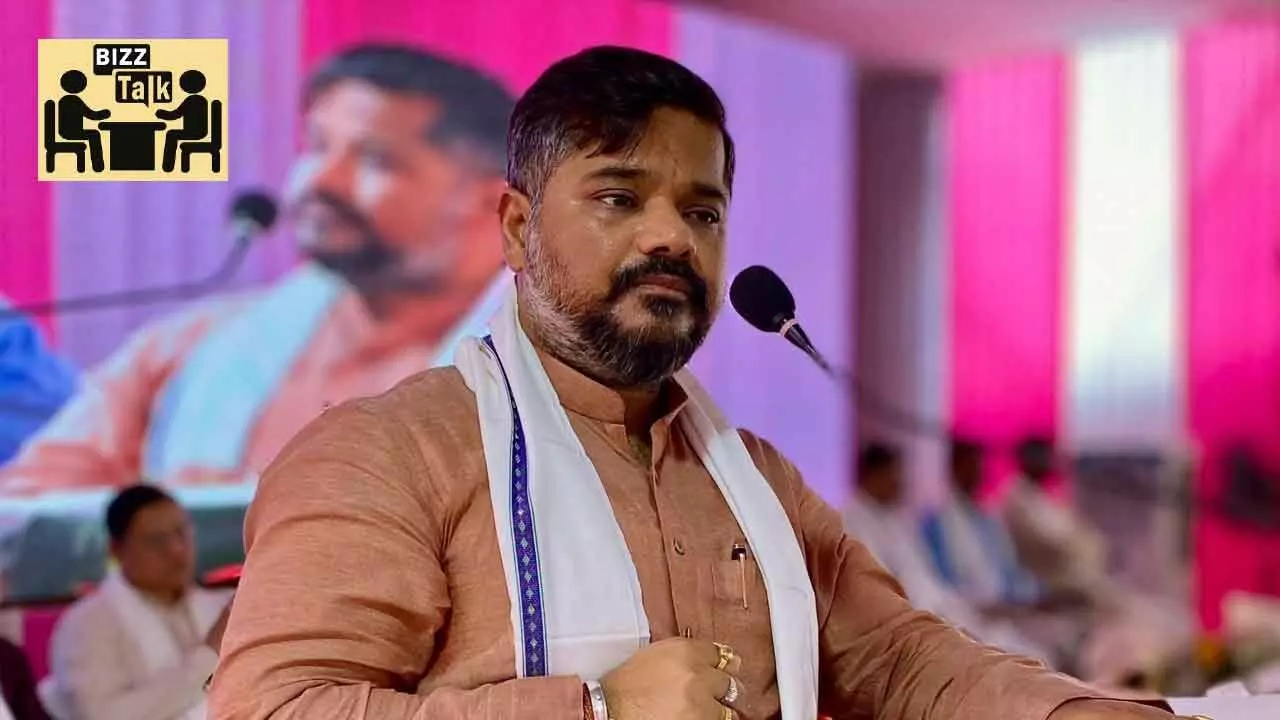
From super-luxury heritage hotels and spiritual tourism circuits to adventure sports, film tourism and enhanced connectivity, Tripura is quietly scripting a new economic narrative. In this wide-ranging interview with Bizz Buzz, Sushanta Chowdhury, Tripura tourism, transport and food minister and one of the youngest ministers in the Tripura cabinet, lays out an ambitious roadmap to transform tourism into a powerful engine of growth, employment and global visibility for the state.
As Tripura bets big on tourism as an economic catalyst, the state’s vision appears both ambitious and pragmatic. If execution matches intent, Tripura may well emerge as the North East’s next big tourism success story, he hopes, saying his dream is to make Tripura the tourism capital of the North East.
You handle several important portfolios—tourism, transport and food. Let me begin with tourism. Today, tourism is increasingly seen as a key pillar of economic growth. Since assuming office, you have launched several initiatives, including plans for an amusement park to promote adventure tourism. What are your core priorities in tourism?
At present, both the central government and our state government are placing special emphasis on employment generation for the youth, particularly through revenue-earning sectors. Our Prime Minister Narendra Modi has repeatedly said that tourism can change the map of India’s economy. Our Chief Minister, Prof. (Dr.) Manik Saha, also accords high priority to tourism and constantly inspires us to work relentlessly in this direction.
Whenever we discuss tourism, I often tell him to give us one-and-a-half to two years to turn tourism into a genuine money-spinner and a strong employment generator. The projects we are conceptualising today will have a significant impact on Tripura’s economy in the coming days.
We are blessed with abundant natural beauty, and our effort is to convert that natural capital into sustainable economic value by attracting tourists from within India and abroad.
That said, I want to be very clear: tourism cannot flourish without infrastructure. New projects alone are not enough. Without roads, connectivity, accommodation and basic facilities, all our efforts would be futile. So infrastructure development remains our foundational priority.
You often speak about the untapped potential of Tripura. Could you elaborate on what was missing earlier and what has changed now?
Let me give you a very simple example. We have a lake that is bigger than Kashmir’s Dal Lake. It has always existed. Yet, for 25 years under the previous Left government, there was no serious effort to present this natural asset to the world. Places like Coconut Kunj and the surrounding lake were never developed or showcased.
Why? Because tourism, in their ideological worldview, was considered a fancy subject—associated with opulence, show-off, people speaking Hindi and English, and visitors coming from outside. They believed tourism was a luxury. They never realised that tourism actually connects the sons and daughters of our state to the wider world and creates livelihoods at the grassroots.
As a result, tourism never received the institutional support it deserved. After our government came to power under the leadership of the BJP, we took a collective decision—working closely with the central government, the Asian Development Bank and other agencies—that Tripura must invest seriously in tourism infrastructure.
From day one, I made it clear: let us build infrastructure first. If we invite people from abroad without ensuring hospitality and basic facilities, they will only take back negative impressions. So we are sequencing our efforts carefully.
Spiritual tourism seems to be one of your flagship focus areas. What are you planning on that front?
Yes, spiritual tourism is a major thrust area for us. I am happy to share that spiritual tourism projects in Tripura are being developed at an investment of around Rs 100 crore. Tripura has a deeply rooted spiritual heritage. We are working on an ambitious project involving replicas of 51 Shaktipeethas.
These Shaktipeethas are spread across India, Sri Lanka, Pakistan and Bangladesh, and it is practically impossible for any devotee to visit all of them in one lifetime. By creating replicas in Tripura, we are offering spiritual-minded tourists—especially from neighbouring countries—a unique, concentrated pilgrimage experience. This has the potential to position Tripura as a major spiritual destination in eastern South Asia.
How is this translating into actual tourist footfalls? Have you seen any measurable impact?
Despite a significant drop in tourists from Bangladesh in recent times, the overall numbers are encouraging. In the last financial year, Tripura recorded around 6.5 lakh tourists. This year, we have already crossed the 7 lakh mark.
To put this in perspective, states like Sikkim attract over 16 lakh tourists annually. Our aspiration is very clear: we want to make Tripura the leading tourism destination in the North East in the coming days.
If Sikkim can do it, why not Tripura? The potential exists. Tourism will increase purchasing power, generate self-employment and make our youth economically self-reliant. With the right infrastructure and investments, I am confident we will get there.
You have also roped in former Indian cricket captain Sourav Ganguly as brand ambassador. How important is branding in tourism?
Branding is extremely important. We have Sourav Ganguly on board as our tourism brand ambassador, and his association has brought tremendous visibility and credibility. He has been actively promoting Tripura’s tourism prospects, and we have received very positive responses.
The increase in tourist numbers is partly a reflection of that. Had such initiatives been taken earlier, Tripura’s tourism sector would have progressed much further by now. But we cannot change the past—we can only move forward with a new perspective and renewed energy.
Beyond spiritual tourism, what other forms of tourism are you actively promoting?
We are promoting tourism in a very holistic manner. This includes adventure tourism, eco-tourism, homestays, destination weddings and film tourism. We are actively inviting filmmakers to shoot in Tripura. Cinema has the power to showcase landscapes, culture and stories in ways that conventional marketing cannot. Film tourism can open entirely new avenues of visibility and investment for the state.
You also handle the transport portfolio, which is closely linked to tourism. How do you see this synergy?
Tourism and transport are inseparable. Connectivity is the backbone of tourism, especially for a landlocked state like Tripura. Here, the concept of a double-engine government has worked to our advantage. Today, Tripura is connected by six National Highways.
Agartala airport handles around 20 to 22 flights daily. On the railways front, we have major trains like the Rajdhani Express, Humsafar, Kanchanjungha and Lokmanya Tilak Express—around seven to eight express trains in total.
At the local level, transport is also playing a crucial role in employment generation—whether through electric vehicles, auto-rickshaws or baby taxis.
Agartala is a small city, and the number of three-wheelers has increased significantly. This sometimes requires regulatory decisions, but we must balance regulation with livelihood concerns.
What about alternative connectivity options like waterways and international flights?
An initiative was taken to develop waterways connectivity with Bangladesh. For the time being, that route is closed due to the prevailing situation. But we remain hopeful that once conditions improve, trade and commerce through waterways will resume.
As transport minister, I can also say that we are making sincere efforts, in consultation with the central government, to start more national and international flights. Our Chief Minister has personally taken initiatives in this regard, and the central government has assured us of full cooperation. Improved air connectivity will significantly boost tourism inflows.
Finally, do you believe states should collaborate rather than compete when it comes to tourism promotion?
Healthy competition is good, but collaboration is essential. An international tourist visiting India should be encouraged to explore multiple neighbouring states as part of an integrated experience.
Last year, during one of our tourism festivals, we organised a Shreya Ghoshal Night and invited 88 tour operators from across the country for a B2B interaction with the chief minister. Those tour operators are now sending tourists not just to Tripura, but also to other states in the region.
We are moving slowly but steadily in building these linkages. Our dream is not just to promote Tripura in isolation, but to position it as a key gateway to the North East—vibrant, welcoming and full of opportunities.





